Showing posts with label Mount Vernon. Show all posts

Thursday, July 23, 2015

Day 23 - One Last Sunrise at General Washington's Mount Vernon


So today is my final day as a Mount Vernon Life Guard Teacher Fellow.  It has been a rewarding and satisfying experience.  I'm sure I will do a reflective blog post later when I have time to get settled back in at home and look back at the last three weeks.

Several of you have asked about the project I've been working on.  The project is essentially done and I'm doing a few modifications here and there before it is ready for prime time.  The lesson I created is a two day lesson for middle school students which teaches some fundamental concepts in archaeology while exploring the Slave Cemetery Survey site at Mount Vernon which is an active archaeological site.  I will definitely be giving it a test run with my own 8th graders in September this fall. I will be posted it once it is ready.  I think it is a very interesting way to both teach Mount Vernon and he tools used by archaeologists.

I am actually writing this blog post at Reagan National Airport in DC.  My flight was scheduled to be gone already but we have a 5 hour delay due to mechanical issues so I've been hanging out and working on a couple of items in the meantime.  I was surprised to run into Denver Brunsman, Associate Professor of History at George Washington, at my gate waiting for a different flight. Denver and I visited last week at Mount Vernon so it was nice to chat while we were both waiting for flights.


My last big activity at Mount Vernon was watching the sunrise one last time before leaving. If you've been following the blog you know that I love to get up early, walk to the piazza at the mansion and watch the sunrise.  It is an amazing view, the Potomac stretched out in front of you and sun rising just off to the left above some trees on the property.  I typically get up at around 5:30 on days that I want to see the sunrise and then reach the mansion a little before 6:00 AM.  It is not crazy early, about the same time that I get up during the school year, but since it is summer without any pressing engagements it is always a bit of a mental struggle to ask myself if I really want to get up to see the sunrise.  

I haven't done it every day here at Mount Vernon - probably about five times in the three weeks that I was here. I have also done it the past over the years staying here for various teacher workshops. Each day is a little different, and some days might be a little bit more dramatic than others. They all look a little different based on the clouds.  Today was a beauty. Probably one of the best I can remember ever seeing here. Mother nature giving me a tip of the hat perhaps on my final day. One can believe it so, right? 


I took all the pictures this morning with my Nexus 6 phone. Usually I bring both my phone and my camera but I actually forgot my camera back at the house this morning. I have developed several places that I like to take pictures. There are a couple of angles that show just the Potomac, some that include the house and some that are from standing on the piazza behind the chairs and looking out on the scene through the columns.  The mansion is currently undergoing some significant renovations right now so I took a couple with just the side of the mansion and the landscape. Some are panoramic and some a traditional. No one else was out this morning on the lawn except for a couple of workers on the mansion getting a head start before the heat of the day hits.

I waited until I took plenty of pictures after the sun peaked out above the trees and then walked a little in both the lower and upper garden for the last time on this trip.  The sun was just clearing the trees in next to the upper garden when I walked through the gate from the bowling green.  The sun was shining and when I did some postproduction on the photo in Snapseed this afternoon it came out really nicely. I also took some pictures of some flowers.


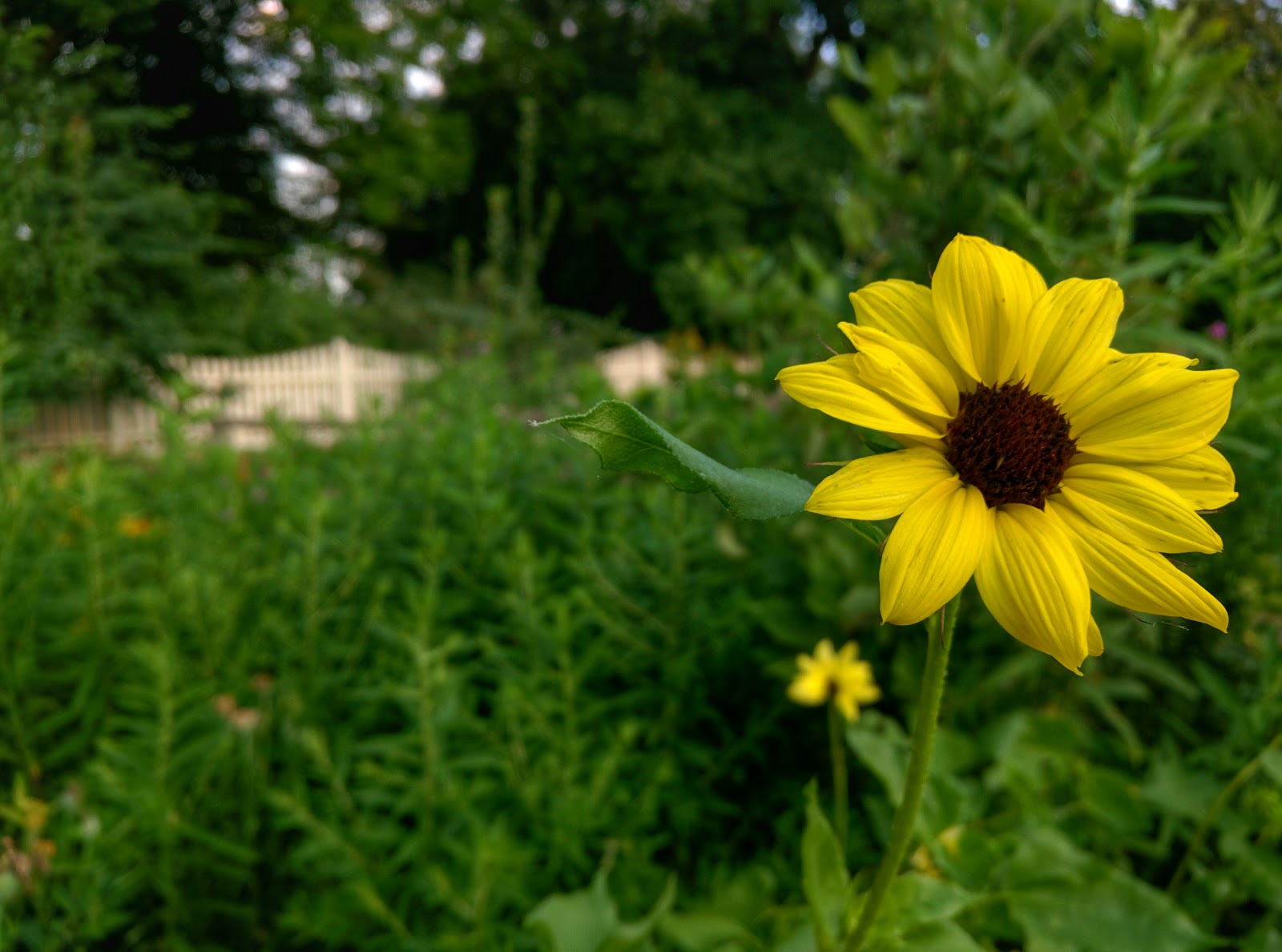


My morning was a perfect way to say goodbye to Mount Vernon for this trip and I can't wait to come back again, to sit on the General's back porch.


Tuesday, July 21, 2015

Day 21 - Video, American History Museum and Sunset at Jefferson Memorial


Today I worked a little more on my archaeology unit and then did a quick film session for the Mount Vernon education staff. They wanted to record a little segment in which I speak to how the experience of being a Mount Vernon Life Guard Teacher Fellow has been for more over the past several weeks.  We filmed it at DeVos House which has a really cool so fireplace so.....what else would we do on a 100 degree day in July? That's right, we fired up the fireplace for a little ambiance. Zerah Jakub, Manager of Educational Research and Outreach at Mount Vernon, took a picture of me getting ready for the video shoot.


In the afternoon I went in to DC specifically to see the new innovation wing of the Smithsonian American History Museum. The new innovation wing opened up on July 1 so it is basically brand new.  The layout of the space is very modern with many interactive displays, video boards, etc.  I took a few pictures of the displays.  I didn't read every tag but it is very interesting display.


The section on advancements and improvement in agriculture caught my eye right away because on the huge screen of rotating pictures I instantly noticed a sold house picture from Nebraska native Sololmn Butcher.  Butcher is one of my history heroes - a person that decided to take pictures of all the sod houses on the Nebraska plains that were disappearing.  He died thinking that in many ways he had failed since his photographs weren't generating a ton of response.  I think he would smile knowing his photographs are being featured in the Smithsonian today in a high tech exhibit.


After the Smithsonian I walked to the Jefferson Memorial and took in the sunset from the memorial.  The Jefferson Memorial is a great place to take pictures at sunset because you have the water and the Washington Memorial as features you can include in your photograph. I especially love taking panoramic pictures of the sunset from the Jefferson Memorial.


Tomorrow is my last full day of the fellowship.  I will do a little packing, catch up with a couple of old friends and start to get ready for home.

Monday, July 20, 2015

Day 20 - Lesson Plan Writing, Gardens and Archaeology

My time as a Mount Vernon Life Guard Fellow is coming to a close, just several more days and I will be heading home.  Much of my time the past couple of days has been spent on writing my archaeology lesson plan.  Saturday and Sunday I spent a lot of time struggling with how to write my lesson plan.  My goal all along has been to create a two day lesson for middle school classrooms to expose students to some of the basics of archaeology and incorporate some of the findings from archaeological sites here at Mount Vernon.  I had planned on doing a "basics of archaeology" activity the first day and then have students divided up in groups to explore one of five possible sites here at Mount Vernon but when I began writing the activity for day one it seemed to long and wasn't specific enough to Mount Vernon.  Sunday I changed course and decided to design the entire lesson around the Slave Cemetery Site. I have the most knowledge of this one from volunteering at the site while here and there were compelling ways in which to teach some of the fundamental archaeology concepts while explaining the history of the site.

Slave Cemetery Archaeology Site - Mount Vernon

I did have several meetings today scheduled as well.  My first meeting was a visit with Jaclyn Jecha, Manager of Library Education Programs Mount Vernon, about the Missouri Teacher Weekend Program. I was a attendee at last fall's Missouri Teacher Weekend workshop here at Mount Vernon and she wanted to ask me about my perceptions of what worked with the scheduled activities last fall - my answer : EVERYTHING! It is a great experience over four days in which Mount Vernon brings in terrific speakers, organizes tours and activities and provides an opportunity for teachers to learn more about Washington that they can bring back to their classrooms. The deadline for applications for Fall 2015 just closed this week.  It is a great experience that I suggest all Missouri K-12 teachers look into in the future.

After lunch I headed over the archaeology lab here on site at Mount Vernon.  I had been working on my lesson plan and wanted a chance to ask one of the archaeologists a couple of questions on topics I was including in my lesson plan.  Eleanor Breen, Deputy Director of Archaeology at Mount Vernon, was in and was very gracious with her time in answering my questions and providing me with some images from the site that I could use in my lesson. This is truly one of the amazing things about being here onsite as I work on the lesson. One minute I am in the library working on the lesson plan focusing on the site and then a couple of minutes later I am in the archaeology lab visiting with an archaeologist who works the site and asking questions to make my lesson more complete.

I had a couple of questions about one specific artifact found at the site last year, one of only a couple artifacts that are not prehistoric. The artifact is a glass disc found at the site.  It would have had a brass button around it and been used as a cufflink. The disc has a coral design on it and an almost identical disc had been found at the excavation of the House for Families slave quarters here at Mount Vernon.  It is a very interesting find and of course can can lead to many discussions. I was able to see it up close and hold it.  


Next I had an afternoon meeting with Dean Norton, Director of Horticulture at Mount Vernon. Dean is the man when it comes to anything related to flowers, gardens or landscape at Mount Vernon.  I wanted to ask him a little about his role in the archaeology of the Upper Garden which took place several years ago here at Mount Vernon. The goal of the Mount Vernon Ladies Association is to make the estate as realistic as possible to what it appeared like at the time of Washington's death in 1799. The upper garden had been restored to be a beautiful garden but wasn't accurate so they recently spent five years doing an archaeological study of the upper garden and now have it as accurate as possible.  Dean is also one of the authors of The General in the Garden, an amazing new book about how Washington planted his flower and vegetable gardens at Mount Vernon.

After my meeting with Mr. Norton it was back to writing my lesson plan.  It is getting closer to being done.  The toughest part is decided what to put in and what to leave out since I have so much great material.


Saturday, July 18, 2015

Day 18 - Slave Cemetery Archaeology Unit Work

Slave Cemetery Survey Site - Mount Vernon

Today was primarily a work day so I don't have a wide variety of photos or videos but it was a productive day.  For my Mount Vernon Life Guard Teacher Fellow project I am creating a lesson plan for middle school teachers which incorporates archaeology and the work here at Mount Vernon. My original plan was to create a day of lessons which introduce the fundamentals of archaeology and then create a lesson for the second day which allowed groups of students to explore one of five archaeology sites at Mount Vernon. Yesterday I was working on it for most of the day and it began to become more and more comprehensive.  

Slave Memorial at Mount Vernon
Today around noon I decided to focus the lesson plan on the Slavery Cemetery Survey currently happening at Mount Vernon as my focus.  A focus on this site will allow me to incorporate more of my experiences volunteering at the site and there is an abundant volume of research available from Joe Downer - the crew chief of the project. Mount Vernon has a variety of video resources available to incorporate in the lesson, including a drone flyover of the site last year.

After working most of the day on the project I needed a break and since I had been inside most of the day I decided to go a on a walk.  Since I am here at Mount Vernon I thought it would be appropriate to walk down to the slave cemetery site to connect with the geography that I had been reading and writing about all day.  

Slave Memorial at Mount Vernon

Friday, July 17, 2015

Day 17 - Washington at the National Portrait Gallery and New Media at Mount Vernon

Washington - National Portrait Gallery

Today's experiences at Mount Vernon started with tagging along on a field trip into the city.  The Mount Vernon Teacher's Institute had a field trip into DC this morning to explore the Smithsonian National Portrait Gallery and I asked if there was room for my to join them.  Luckily there was room and I was able to join the tour.

We arrived at the Smithsonian National Portrait Gallery in the morning prior to the opening of the museum to the general public.  Our focus today was viewing and discussing a variety of George Washington portraits in the gallery. Our guide was Briana Zavadil White, Student and Teacher Programs at the Smithsonian National Portrait Gallery.  She did a great job of both teaching us about the portraits of Washington but also giving us some tools that we can use with our students when teaching about art, specifically portraits.

We started by looking at some of the more contemporary portraits in the gallery, including LL Cool J and Bill Gates.  This portion of the gallery was our first stop to discuss some of the elements included in analyzing portraits. Next we moved on to the presidential gallery and an examination of some Washington portraits.

Washington and I at the National Portrait Gallery

We stopped first at the famous Lansdowne Portrait of Washington, painted by Gilbert Stuart in 1796. When we reached the portrait we were all given 30 seconds to soak in the paining and then we were asked to turn our back to the portrait and our guide asked us a variety of questions about what we remembered about the picture.  It was interesting to both see what each person found memorable and what details we missed.  It provided everyone an opportunity to explain different things in the painting and was definitely a technique I would use in my classroom when teaching art. The painting is much larger than I had imaged it to be. We also looked at a several other Washington portraits in the gallery including The Anthenaeum, an unfinished work by Gilbert which was said to be a very accurate portrait of Washington and the one you find on your $1 bill.

The Anthenaeum - National Portrait Gallery

Houdon plaster bust of Washington - National Portrait Gallery

The rest of the presidential portraits in the gallery were fascinating.  I especially liked Harry S. Truman and found the more contemporary portrait of Bill Clinton to be interesting.  The museum does not currently have a portrait of President Obama.  He will be contacted in the future to commission a portrait for the gallery.

Truman - National Portrait Gallery

Clinton - National Portrait Gallery
National Portrait Gallery Courtyard

When I returned to Mount Vernon in the afternoon I had a meeting with Matt Briney, Vice President of New Media at Mount Vernon, and Robert Shenk, Senior Vice President for Visitor Engagement at Mount Vernon.  As a geek I am interested in the way in which Mount Vernon is using newly developed apps, online video and social media to connect with visitors here on the grounds and people like me - teachers who want to bring the Mount Vernon experience into our classrooms located around the country. I found it very interesting and I think they also enjoyed hearing the perspective a teacher who uses their content in the classroom. Mount Vernon has a great visitor app and recently launched a new spy app named "Agent 711" in which visitors are able to interact with locations on the grounds while tracking down a spy mission. I think in the future Mount Vernon will have some interesting opportunities for teachers via the Internet.


It was another Tomorrow I will be zeroing in on creating the content for my middle school archaeology unit.  


Thursday, July 16, 2015

Day 16 - Historic Photos, Mount Vernon GIS, Teaching the Constitution and Colonial Music

An early image of Washington's Tomb - roughly 1850's

Today was a great example of how diverse a day can be as a Mount Vernon Life Guard Fellow.  As a teacher fellow I have the ability to decide how I want to spend most of my time here at Mount Vernon. The education staff here at Mount Vernon though will help you schedule and contact any potential staff member at Mount Vernon for a meeting.  Since my project is focused on archaeology, the Mount Vernon education staff arranged several meetings for me during my first week with the archaeology staff here.  These meetings have been extremely helpful and the ability to sit down and visit with experts in their field is a valuable and unique opportunity.

In addition to the natural connections, archaeology staff for example for my project, I also requested if I could meet with Mount Vernon staff members in areas that I have a particular interest.  I am an unabashed History Geek. I love any intersection in which technology and history collide. Today I had meetings with experts in the areas of historical photo preservation and GIS (Geographic Information Systems) because I love those topics. 

My first meeting this morning was with Dawn Bonner, Photo Services at Mount Vernon. Dawn also happens to have graduated from my alma mater - the University of Nebraska at Kearney - and we actually attended UNK at the same time. Go Lopers! Dawn helps to ensure that the collection of images Mount Vernon has as well as managing requests to use and license images of Mount Vernon. 

Dawn described that having an image often creates a variety of questions. Who is in the picture? When was it taken? Who took the picture? Why was the picture taken in the first place? Clues like the size of trees or if specific items are located on the sides of buildings can help narrow down the process. 

She showed me some images in the collection ranging from daguerreotypes, cabinet cards, stereo cards and carte de viste cards from a Mount Vernon collection.


A glass stereo card of Mount Vernon
Stereo card of Washington's original 16 sided barn


A carte de viste of Edward Everett 
This week Mount Vernon is also hosting one of their teacher institutes, a week long workshop with teachers from around the nation here to learn more about Washington.  Their schedule is full of speakers, field trips and discussions.  I sat in on the end of a lecture by Edward S. Lengel, the author of Inventing George Washington, as he presented on the presidency of George Washington. 

After lunch a met with Eric Benson, GIS Manager at Mount Vernon to discuss how Mount Vernon uses GIS technology to both interpret the past and preserve the future.  As a geek that loves Google Maps and geography tools this is fascinating to me.  Eric showed me examples of how GIS technology is current being used to essentially inventory all the information known about the building and grounds on the estate which can then be used for a wide variety of uses.


GIS application of the Mount Vernon mansion showing the location of every "door"

Example of GIS detail of a room in the mansion


GIS of Mount Vernon Estate


Washington's farms GIS land ownership map

I thought one of the most interesting ways that GIS is used at Mount Vernon is to help manage the viewshed, all of the geography which can be viewed from a specific geographic location.  This is important to Mount Vernon because of the effort to preserve not only the estate but also the view that Washington had of the Potomac from the mansion.  Mount Vernon can use GIS tools which demonstrate how a proposed development across the Potomac will be viewed from the estate while calculating the trees and geographic layout of the area.  I would encourage you to check out this blog post that Eric wrote describing in detail how GIS is used to protect Mount Vernon's viewshed. I also visited with Becky, a student intern who is currently using GIS tools to trace the ownership of land from Mount Vernon's five farms both before and after Washington's time.  

Upon returning to the library I was able to sit in on a panel discussion from the Mount Vernon staff and several guest lecturers on methods of teaching the Constitution in the classroom. Teachers at the institute also shared examples of what works in their classrooms. After the lecture I had some time to visit with Denver Brunsman, an Associate Professor of History at George Washington University. I met Denver last fall while attending the Missouri Teacher Weekend at Mount Vernon.  We have kept in touch and I appreciate his perspective on teaching colonial America in higher education. 


Mount Vernon Teacher Institute discussion on teaching the Constitution

This evening I joined the Teacher Institute participants for an evening presentation on the music of Washington's time with David Hildebrand of the The Colonial Music Institute. He is probably the most knowledgable historian on the topic of colonial music. He demonstrated the harpsichord, the German flute, a Spanish guitar and drums.  


David Hildebrand of the The Colonial Music Institute

As you can see, the opportunities available as a Mount Vernon Life Guard Fellow is diverse and plentiful if you want to take advantage of what is available.  It is sort of like being in colonial American Disneyland for history teachers like myself.

Tomorrow I will be heading in to Washington DC to learn about Washington in the national memory at the National Portrait Gallery.


Wednesday, July 15, 2015

Day 15 - Mount Vernon Sunrise, the Airport and Writing

Sunrise at Mount Vernon by Eric Langhorst - July 15, 2015

Today is a bittersweet day as it is the last one with my wife Jayme here at Mount Vernon.  She flew out for my graduation last Thursday and will return home to Liberty while I stay for roughly another week of my fellowship.  We've been two crazy kids, history geeks, seeing a lot of cool places that we have often read about and watching in documentaries.  

One thing Jayme had not yet seen on her visit to Mount Vernon was the sunrise from the Mount Vernon mansion piazza.  When I asked last night if she was game to get up early - roughly 5:20 AM - she said yes so we set our alarms and headed out to reach the piazza before the sun poked out above the trees.

Quite a few teachers attending the Mount Vernon Teacher Institute this week had the some idea and were on the piazza when we arrived.  It was a beautiful morning with relatively comfortable temperatures for Virginia in July and no rain in sight.  


Sunrise at Mount Vernon reflecting back on the piazza
I have said this in previous blog entries but it is a truly emotional thing to watch the sunrise over the Potomac with almost the exact same view that Washington would have had when he was alive back in the late 1700's.  I have included some pictures below.


Sunrise at Mount Vernon

This afternoon I took Jayme to the airport and was a little sad that she was no longer there with me but also very appreciative of the time we were able to spend out here together. Typically I write my blog entry for the day in the evening before called it a day but there were so many things happening with family the past several days I wasn't able to keep up with the daily routine so I spend some time today catching up with my blog posts. 

Tomorrow is a full day of meetings, lectures and getting back to work on creating my middle school archaeology unit.


Sunday, July 12, 2015

Day 12 - Sharing Mount Vernon with My Family

The Langhorsts at Mount Vernon
Today I had the pleasure of sharing a place that I have come to love over several visits in the past several years - Mount Vernon - with my family.  Jayme and I had visited Mount Vernon on a summer vacation in 2005 but my mom and dad had never visited.  My parents both love history and my dad is a former history teacher / librarian who is also an accomplished gardener.  I have been looking forward to showing my family Mount Vernon for a long time.  

We visited Mount Vernon on a Sunday and purchased our tickets the day before online.  Purchasing tickets for your Mount Vernon visit saves you a little on the price of the ticket and also allows you to select the time at which you would like to take your tour of the mansion.  We entered the grounds when they opened at 8 AM and were first in line for the mansion tour at 9 AM. Prior to the mansion tour we sat outside on the piazza and took in the beauty of the morning overlooking the Potomac.  

Dad at Mount Vernon

After enjoying the mansion tour we explored the out buildings prior to visiting Washington's tomb.  We arrived just before the morning wreath laying ceremony.  My dad volunteered to read a portion of Washington's writing during the ceremony.  I recorded it on my cell phone and the video can be seen below.  He was given the copy of the reading to keep as well. It was a special moment and one that I know my dad will remember.


Dad at Washington's Tomb - Mount Vernon

Next up was the landscape and gardens tour.  My dad loves gardening so this was the one thing he looked most forward to on the grounds. It was a great tour and the weather even cooperated with a slight occasional breeze.  We toured the bowling green, the upper garden, the lower garden and the back lawn.  All of us have read Founding Gardeners and The General in the Garden so it was great to see the gardens in person. 


Lower Garden at Mount Vernon

Later in the day we visited the pioneer farm. Seeing Washington's 16 sided barn in action with a threshing demonstration was a highlight. After visiting the exhibits and a little shopping we went into Alexandria for a night on the town a fancy dessert.  


It was a memorable day and one that I know I, and my family, won't soon forget.  My parents will be heading back to Kansas City in the morning. The next phase of the adventure begins tomorrow for Jayme and I as we head to Monticello in the morning.


Rubbing George's Nose for Good Luck